Acupuncture offers a scientifically proven method for reducing the frequency and intensity of chronic headaches, boasting success rates as high as 85 percent in clinical research. Individuals searching for acupuncture for migraines Fort Collins Loveland Colorado can find relief through treatments that naturally stimulate endorphin release and restore hormonal balance. This holistic therapy provides a substantial positive effect for those seeking long-term migraine management.
If you live with migraines, you already know the drill: the warning signs creep in, the pain builds, and suddenly your day, your plans, and your ability to function disappear completely. For many people in Fort Collins and Loveland, that cycle repeats month after month despite trying multiple medications and treatments. Acupuncture has emerged as one of the most well-supported, non-pharmaceutical options for reducing both the frequency and severity of migraines, and the research behind it is more compelling than most people realize. In this article, you will learn what the science actually says, how acupuncture works neurologically to interrupt migraine patterns, what a realistic treatment timeline looks like, and how it compares to conventional medications so you can make a truly informed decision about your care.
What Migraine Sufferers in Northern Colorado Are Really Looking For
You know the drill: you wake up already behind, the morning light through the blinds feels like a threat, and you start calculating whether today is a day you can function or a day you cancel everything. For many people living in Fort Collins, Loveland, Windsor, and across Northern Colorado, chronic migraines and tension headaches are not occasional inconveniences. They are the organizing principle around which life gets scheduled, or doesn't.
Many of these same people have already been through the prescription rotation: triptans, beta-blockers, antidepressants repurposed as preventives, CGRP inhibitors. Some of those medications help partially, or helped for a while. Others came with side effects that traded one problem for another. What they are looking for now is something different — something that addresses the pattern, not just the episode.
That is precisely why acupuncture for migraines in Fort Collins, Loveland, and the surrounding Colorado region has moved well beyond alternative curiosity into evidence-backed clinical practice. At Acumotion Sports Therapy, the approach combines acupuncture and dry needling with integrative manual therapies, specifically designed for conditions like chronic migraines and cervicogenic headaches.
What follows is a straightforward look at what the research actually supports, how acupuncture works physiologically on migraine pain, what realistic treatment looks like, and how to get started locally.
What the Research Says About Acupuncture and Migraine Relief

The evidence behind acupuncture for migraines is more substantial than most people realize, and it comes from rigorous sources.
A meta-analysis published in Neurology and Therapy by Harvard Medical School researchers pooled data from nearly 5,000 migraine patients across multiple randomized controlled trials. The findings were clear: acupuncture produced substantial, lasting reductions in headache days per month, with efficacy comparable to or exceeding commonly prescribed preventive medications and with a significantly better side effect profile. Research also suggests that approximately 85% of patients experience meaningful improvement in migraine frequency or intensity through a structured course of acupuncture care.
For chronic tension-type headaches specifically, clinical trials indicate that a course of roughly 20 sessions delivered at a rate of 2-3 per week produced reliable, measurable relief. That is not a vague wellness claim; it is a specific, reproducible finding from controlled research.
What this means practically: acupuncture for migraines in Fort Collins, Loveland, and Northern Colorado is not a fringe pursuit or a last resort born of desperation. It is an intervention that has been examined under the same rigorous conditions applied to pharmaceutical options, and it holds up.
The acupuncture and dry needling services at Acumotion Sports Therapy are grounded in this clinical evidence base. Understanding what the research supports is the starting point; understanding why acupuncture works on migraine physiology is what makes those findings make sense.
How Acupuncture Actually Reduces Migraine Pain: The Neuroscience

So why does inserting thin needles at specific points in the body reduce migraine pain? The answer is not mysterious, and it is not purely theoretical. Research has identified several concrete physiological mechanisms that explain what acupuncture is actually doing inside the nervous system.
The most significant involves the trigeminal pain pathway. Migraines are primarily a trigeminal nerve event: the trigeminal system becomes sensitized, triggering the cascade of vascular changes and pain signaling that defines a migraine attack. Acupuncture has been shown to modulate this pathway directly, dampening the hypersensitivity that keeps the system stuck in a pain cycle.
Beyond that, acupuncture regulates serotonin levels, which fluctuate sharply in the hours before and during a migraine. It also measurably reduces cortisol, the stress hormone strongly linked to migraine onset. And it stimulates the release of endogenous opioids, the body's own pain-relieving chemicals, without the dependency concerns associated with pharmaceutical opioids.
These are not theoretical effects. They are measurable, reproducible, and documented in the same clinical literature that informs standard neurology practice.
Traditional Chinese medicine adds a useful clinical layer without contradicting any of this. In TCM, headache location provides diagnostic information: pain behind the eyes maps to the Liver channel, while occipital pain at the base of the skull corresponds to the Bladder channel. These mappings guide needle placement decisions in ways that experienced practitioners find clinically reliable. Think of it as a different vocabulary describing overlapping territory, one that has informed effective treatment for a very long time.
For Loveland, Colorado patients and those in Fort Collins seeking care grounded in both frameworks, the practical point is this: acupuncture works on migraines through biology, and those biological effects are well characterized.
Migraine Triggers Acupuncture Can Help Address

Understanding the neuroscience of how acupuncture works is useful, but for chronic migraine sufferers, the more pressing question is often this: why do the headaches keep coming? Addressing that question means looking at triggers, not just attacks.
Most acupuncture practices treat the migraine. At Acumotion, the treatment plan is built around what is driving it. That distinction matters, because the same biological mechanisms that make acupuncture effective against acute migraine pain also allow it to interrupt the underlying patterns that make migraines recurrent.
The most common triggers, and how acupuncture engages each one:
Stress and nervous system dysregulation. Acupuncture directly activates the parasympathetic nervous system, shifting the body out of the sympathetic overdrive state that primes migraine onset. Cortisol reduction is measurable, not theoretical.
Sleep disruption. Poor or fragmented sleep is both a migraine trigger and a consequence of chronic pain. Acupuncture helps regulate melatonin and cortisol rhythms, improving sleep quality in ways that reduce headache frequency over time.
Hormonal fluctuations. For women experiencing menstrual migraines, acupuncture's effect on hormonal regulation offers a non-pharmaceutical option for addressing the cyclical pattern specifically.
Neck and shoulder muscle tension. Cervicogenic headaches and tension-type headaches have a significant mechanical component. Tight suboccipital muscles, upper trapezius, and cervical fascia directly refer pain into the head.
That last trigger is where Acumotion's integrative model becomes especially relevant. Combining acupuncture with myofascial release or manual therapy addresses the musculoskeletal drivers of cervicogenic and tension headaches at the same time as the neurological migraine pattern, rather than treating them as separate problems.
How Many Sessions Does It Take to See Results for Migraines?
Treating the triggers rather than just the attacks is a meaningful shift in approach. But it raises a practical question that most acupuncture resources answer poorly: how long does this actually take?
Clinical research supports a course of 10 to 20 sessions, delivered at 2 to 3 visits per week during the initial treatment phase, then tapering as frequency and intensity improve. That is not a vague estimate; it reflects the specific protocols used in the randomized controlled trials that produced measurable, lasting results in migraine patients.
Some patients notice meaningful reductions in headache frequency or intensity within the first 4 to 6 sessions. Others, particularly those with daily or near-daily migraines that have been present for years, require a longer initial course before the nervous system begins to regulate consistently. Chronic patterns that took years to develop rarely resolve in two visits.
At Acumotion, the treatment arc starts with a thorough intake: headache location, frequency, intensity, known triggers, sleep quality, stress load, current medications, and what has already been tried. That information shapes an individualized treatment plan rather than a generic protocol. Progress is reassessed regularly, and the plan adjusts as patterns shift.
Once acute frequency is reduced, monthly or seasonal maintenance sessions help sustain the results long-term. The effects of acupuncture compound over a course of care, which is a different model than taking a pill for a single episode but one that addresses why the migraines keep returning in the first place.
Acupuncture vs. Migraine Medications: A Realistic Comparison
That 10-to-20 session treatment arc naturally prompts a comparison question: how does acupuncture actually stack up against the preventive medications neurologists typically prescribe?
The honest answer is that it compares well, particularly on tolerability. Topiramate, propranolol, and amitriptyline are the most commonly used preventive options, and each carries a documented side effect burden. Cognitive fog and word-finding difficulty are frequent complaints with topiramate. Amitriptyline often causes fatigue and weight changes. Propranolol can reduce exercise tolerance, which matters considerably for the athletes and active individuals Acumotion regularly works with. These are not rare reactions; they are common enough that many patients discontinue medication before it has time to work.
The Harvard-published meta-analysis of nearly 5,000 migraine patients found acupuncture produced comparable reductions in headache frequency and intensity to these same medications, with a dramatically better side effect profile. For patients who are pregnant, cannot tolerate existing medications, or want to reduce their pharmaceutical load, that distinction has real clinical weight.
For many patients, the most effective path is not acupuncture instead of medical care but alongside it. A well-coordinated approach that supports neurological regulation through acupuncture while maintaining an open conversation with a neurologist or primary care provider tends to produce the best outcomes. Acumotion works within that model, coordinating with a patient's existing medical team rather than operating in isolation. Discussing acupuncture as part of a broader migraine management plan with your provider is a reasonable and increasingly mainstream step.
What to Expect at Your First Migraine Acupuncture Appointment in Loveland or Fort Collins

Knowing that acupuncture compares favorably to preventive medications is useful. Knowing what actually happens when you walk through the door is what makes it possible to book the appointment.
The first visit at Acumotion Sports Therapy begins with a thorough intake before any needles are placed. That means a detailed conversation covering your headache history: how long you have had them, how frequently they occur, where the pain is located, how intense attacks get, what triggers you have identified, how your sleep has been, your current stress load, what medications you are taking or have tried, and what treatments have or have not helped in the past. That information is not collected as a formality. It directly shapes the treatment plan.
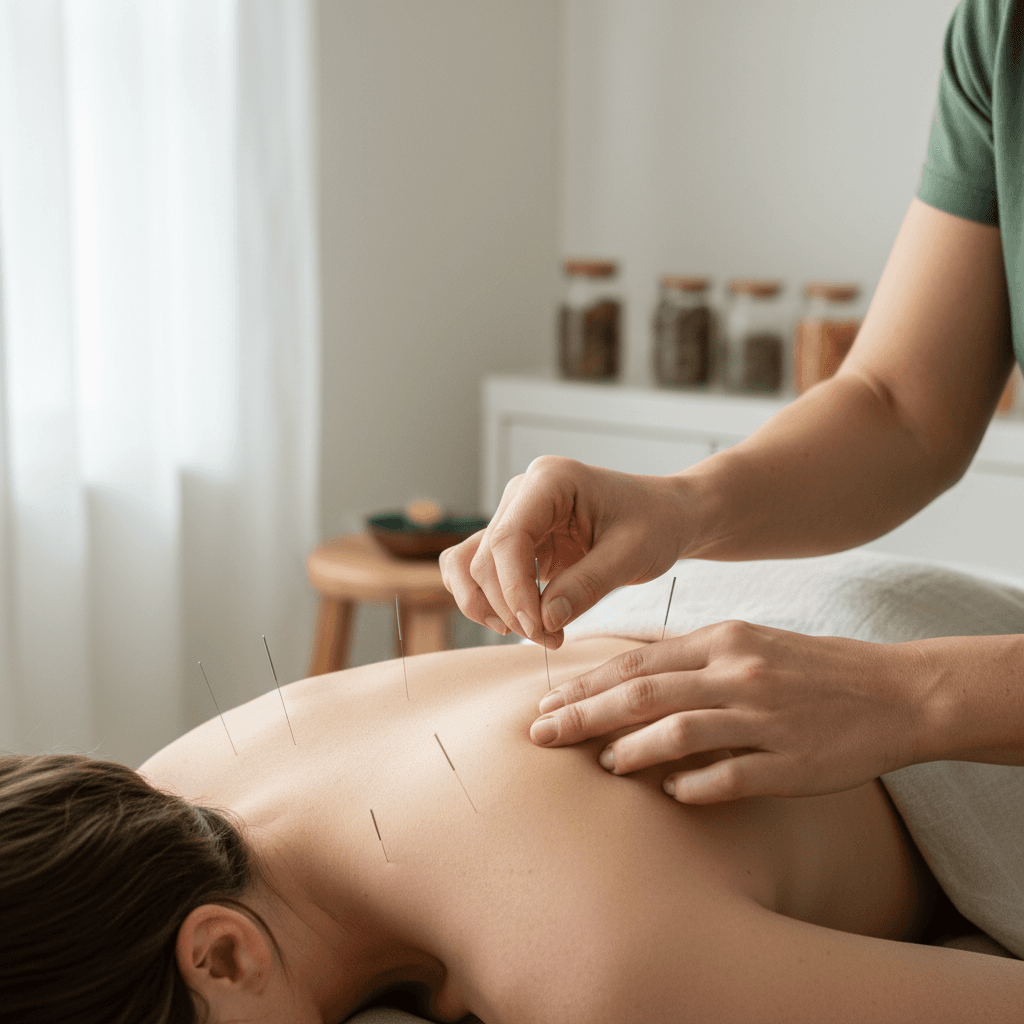
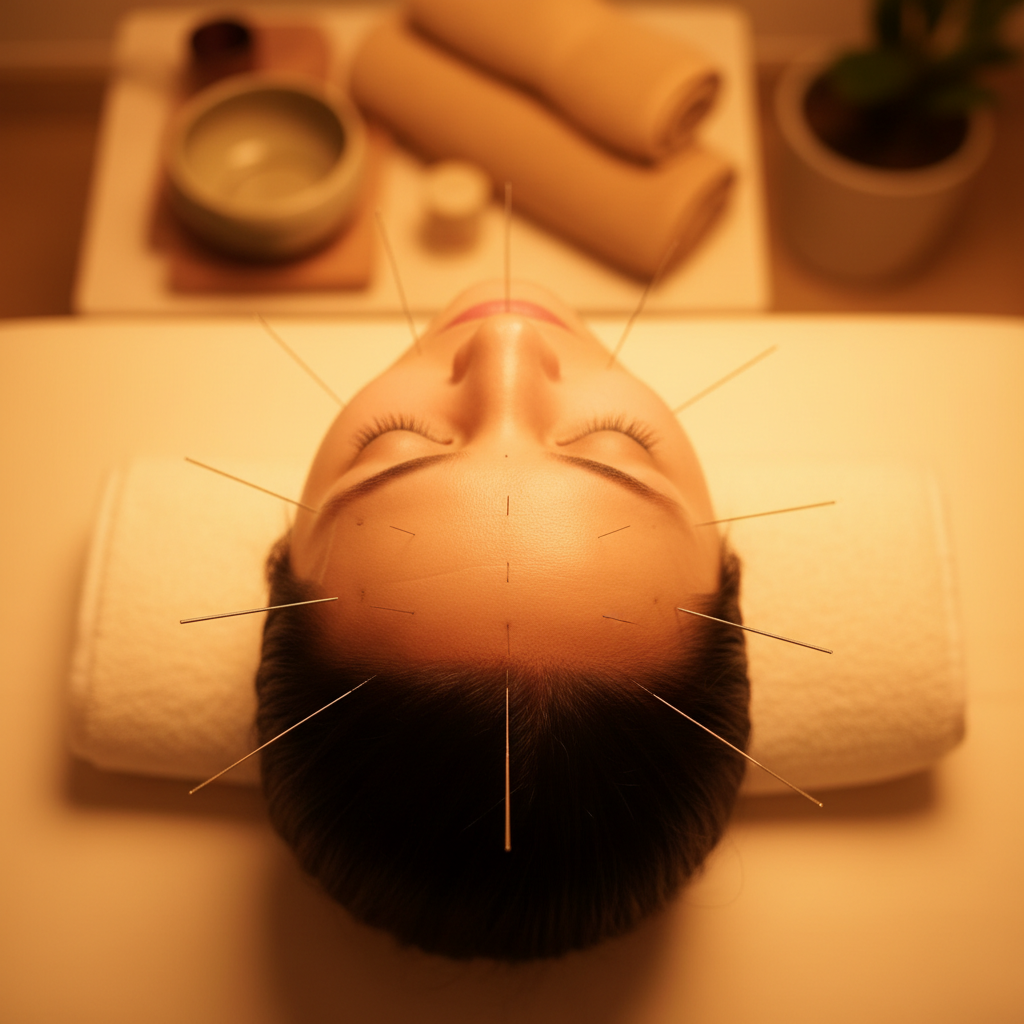
Needle placement for migraines extends well beyond the head. Points on the neck, scalp, temples, hands, and feet are commonly used, depending on your specific headache pattern and the meridian channels involved. For patients with significant cervical muscle tension contributing to their headaches, local points in the upper neck and suboccipital region are often included alongside distal points.
Sessions run 45 to 60 minutes. Most patients find the needles far less uncomfortable than anticipated; the sensation is typically described as a mild pressure or dull ache rather than sharp pain. If needle anxiety is a concern, that is worth mentioning at intake so the approach can be adjusted accordingly.
For Loveland, Colorado patients and those serving Fort Collins and surrounding communities including Windsor and the broader Northern Colorado area, Acumotion offers flexible scheduling to accommodate the reality that severe migraine days can make travel genuinely difficult.
Is Acupuncture for Migraines Covered by Insurance in Colorado?
Scheduling that first appointment often comes with a practical question: will insurance cover any of this?
Coverage for acupuncture varies widely depending on your plan, carrier, and the specific condition being treated. Some Colorado insurance plans do cover acupuncture for chronic pain conditions, including chronic headache and migraine management. The 2020 Medicare expansion of acupuncture coverage for chronic low back pain has contributed to a broader trend of insurers reconsidering acupuncture benefits, though coverage remains inconsistent across plans.
The most reliable step is to call your insurance provider directly and ask specifically about acupuncture coverage for chronic headache or pain management. Acumotion can provide documentation to support reimbursement requests where applicable. For Loveland, Colorado patients and those serving Fort Collins and surrounding communities, reaching out to Acumotion directly is the best starting point for understanding your options before your first visit.
Managing chronic headaches requires a holistic approach that targets the root cause of the tension. While self care strategies provide temporary relief, acupuncture offers a long term solution by regulating the nervous system and improving circulation. If you want expert help navigating your recovery journey, we invite you to explore our range of Services at Acumotion Sports Therapy. Our team is dedicated to helping you find lasting comfort; ensuring you can return to the activities you love without the burden of persistent pain.