Before I studied acupuncture, I studied shiatsu. Years later I trained in trigger point therapy and orthopedic medicine. I expected to learn an entirely different system. Instead, I discovered that many of the clinical findings were remarkably familiar. The terminology had changed, but my hands were often finding the same tissues.
That experience made me question why Eastern and Western manual therapies are usually presented as if they operate through completely different mechanisms.
Chronic muscle tension often leaves athletes searching for clarity among competing clinical terms. Is that persistent shoulder knot a trigger point, an Ashi point, or something else? These modalities are often presented as competing schools of thought. In practice, they are two different maps describing the same biological landscape.
Two Different Maps for the Same Biological Landscape
My clinical journey began with the hands-on practice of shiatsu, where I learned to palpate the body through pressure and touch. Over time, my focus shifted toward the precision of Trigger Point Therapy. I spent years identifying hyperirritable bands of muscle tissue and their predictable referral patterns. Eventually, this path led me to become a licensed acupuncturist, adding Dry Needling and Sports Acupuncture to my toolkit. It was during this transition that I had a profound realization: I was not learning new locations, but a new language for the same physical reality.
The moment of clarity came when I realized the knots I had been treating as a trigger point specialist were often anatomically identical to the points I was now studying in my acupuncture curriculum. Traditional Chinese medicine describes these sites in terms of qi and blood. Modern orthopedic science discusses myofascial pain and neuromuscular junctions. The physical tissue being addressed is the same. These are not opposing ideologies. They are two different vocabularies used to navigate the same body.
Recognizing this overlap changes how treatment works. Instead of choosing between a traditional approach and a clinical orthopedic one, a practitioner can use both. This integration provides a more complete picture of why a muscle remains in a state of chronic contraction and how to most effectively facilitate its release. By understanding these systems as complementary frameworks, we can provide more targeted, results-driven care for athletes and active individuals.
The 71 Percent Anchor: Understanding the Melzack Correspondence
The scientific validation for this clinical observation began in 1977 with a landmark study by Dr. Ronald Melzack. By comparing the maps of myofascial trigger points described by Western physicians to the classical maps of traditional Chinese medicine, Melzack and his team discovered a 71 percent correlation in anatomical location. This research provided the first objective evidence that these two systems, though separated by millennia and vast cultural differences, were targeting the same physiological structures.
The evidence for this overlap has only strengthened with modern scrutiny. Dr. Peter Dorsher, a physician at the Mayo Clinic, later expanded on this work. His comprehensive review analyzed 255 trigger points and found that over 90 percent of them corresponded directly to established acupuncture points. Even more striking was the clinical correlation: 94 percent of the matched pairs shared nearly identical pain referral patterns. A knot in the infraspinatus muscle identified in a Western Trigger Point Therapy session refers pain to the same areas as the acupuncture point SI11, located in the exact same spot.
Statistically, this is difficult to dismiss as coincidence. The probability of two distinct medical traditions independently identifying the same points by pure chance is estimated at 1 in 7 trillion. These systems appear to represent the same clinical phenomenon, discovered through two different methods of observation: one through the cumulative experience of patients over centuries, and the other through modern anatomical investigation.
The data points toward a universal truth about how the human body stores tension and experiences relief. This 71 percent correspondence anchors a practical clinical reality: bridging these worlds allows us to apply the precision of orthopedic science alongside the depth of traditional care.
Ashi Points: The Ancient Precursor to Modern Trigger Points
This statistical overlap is not a modern coincidence but a clinical validation of observations made over a millennium ago. In traditional Chinese medicine, these reactive areas are known as Ashi points. The term translates literally to "Ah, yes!" or "That is the spot," describing the reflexive verbal response a patient gives when a practitioner palpates a tender, hyperirritable site. While Western medicine officially defined trigger points in the mid-20th century, the Ashi point classification has been a foundational part of acupuncture since at least the 7th century.
These points are distinct from the fixed channel points found on standard acupuncture maps. Fixed channel points have specific, permanent anatomical locations used for systemic regulation. Ashi points are transient and reactive. They appear in the presence of pain or musculoskeletal dysfunction. When I evaluate a patient for a sports injury, I look for both. The fixed points may address systemic inflammation or neurological regulation, while the Ashi points target the specific source of myofascial restriction.
Identifying an Ashi point is essentially identifying a trigger point. Both represent localized zones of physiological distress where tissue has become sensitized. By recognizing that these classifications describe the same phenomenon, we bridge the gap between ancient diagnostic palpation and modern orthopedic assessment.
The Neurophysiology of Relief
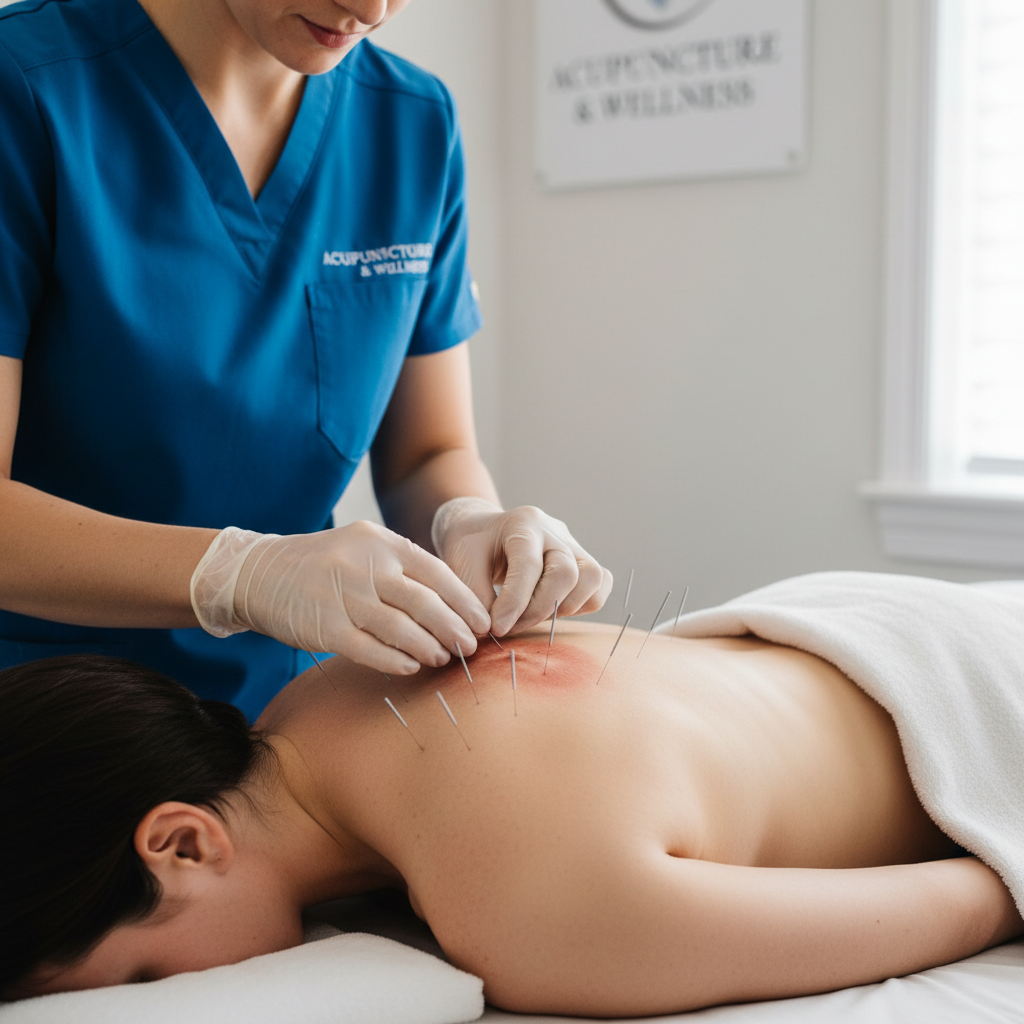
Understanding why these systems overlap requires looking beneath the skin at the cellular and neurological level. When a needle is inserted into a trigger point or an Ashi point, it often targets the motor point — the specific site where a motor nerve enters the muscle belly. This insertion creates a mechanical disruption that resets the muscle spindle. By breaking the cycle of chronic contraction, the needle forces the muscle fibers to relax, often producing a local twitch response, a diagnostic sign that the neuromuscular junction has been successfully modulated.
Beyond the mechanical release, there is a measurable shift in the tissue’s electrical properties. Research shows that both acupuncture points and active myofascial trigger points exhibit significantly lowered electrical resistance compared to the surrounding skin, suggesting these sites are nodes of high metabolic activity and neurological signaling. When we stimulate these points through Dry Needling or Sports Acupuncture, we engage with the body's bio-electrical network to facilitate faster tissue repair and decreased sensitivity.
This process also triggers a profound biochemical cascade. The micro-trauma of the needle prompts the brain to release endogenous opioids such as enkephalins and endorphins. By combining the mechanical reset of the muscle spindle with the systemic release of natural painkillers, we address injury from both a structural and a chemical perspective. This dual-action approach is why integrating Trigger Point Therapy with needle-based techniques is so effective for resolving stubborn musculoskeletal conditions that have failed to respond to more superficial treatments.
Why This Matters for Northern Colorado Athletes
Athletes in Northern Colorado rarely stick to one activity. A weekend might involve trail running near Horsetooth Reservoir, cycling through Windsor, or high intensity training in a Fort Collins gym. This level of activity demands a recovery strategy as multifaceted as the movement itself. At Acumotion Sports Therapy, I evaluate conditions like sciatica or shoulder impingement through both a rigorous orthopedic lens and a systemic perspective informed by traditional medicine.
This integration is vital because a stubborn knot in the gluteus medius is rarely just a local issue. While Dry Needling provides immediate mechanical release, understanding the overlap between these systems allows us to address broader postural and neurological patterns. By treating the local source of pain alongside distal points, I help a Windsor hiker resolve acute pain while also regulating the nervous system to prevent recurrence.
Which Approach Is Right for You
Deciding which specific modality to use during a session depends on the depth of the dysfunctional tissue and the patient’s comfort level. Manual Trigger Point Therapy utilizes targeted compression to relax hyperirritable bands of muscle — an ideal starting point for surface level tension or for those who prefer a non-invasive approach. In contrast, Dry Needling and Sports Acupuncture leverage thin filaments to reach deeper motor points that manual pressure cannot always isolate.
Modality | Primary Method | Clinical Intent |
|---|---|---|
Trigger Point Therapy | Manual compression | Surface to mid-level release; myofascial softening |
Dry Needling | Intramuscular needle insertion | Resetting deep motor points; eliciting twitch responses |
Sports Acupuncture | Integrative needle placement | Systemic recovery; nervous system regulation |
These methods are not mutually exclusive. At Acumotion Sports Therapy, I often integrate multiple tools within a single visit. A session might begin with manual myofascial release to assess tissue quality, followed by orthopedic acupuncture to address a specific sciatica referral pattern or a rotator cuff restriction. By viewing these techniques as a spectrum of care rather than isolated choices, I provide a comprehensive treatment plan that addresses both the local knot and the systemic patterns that allowed the injury to develop.