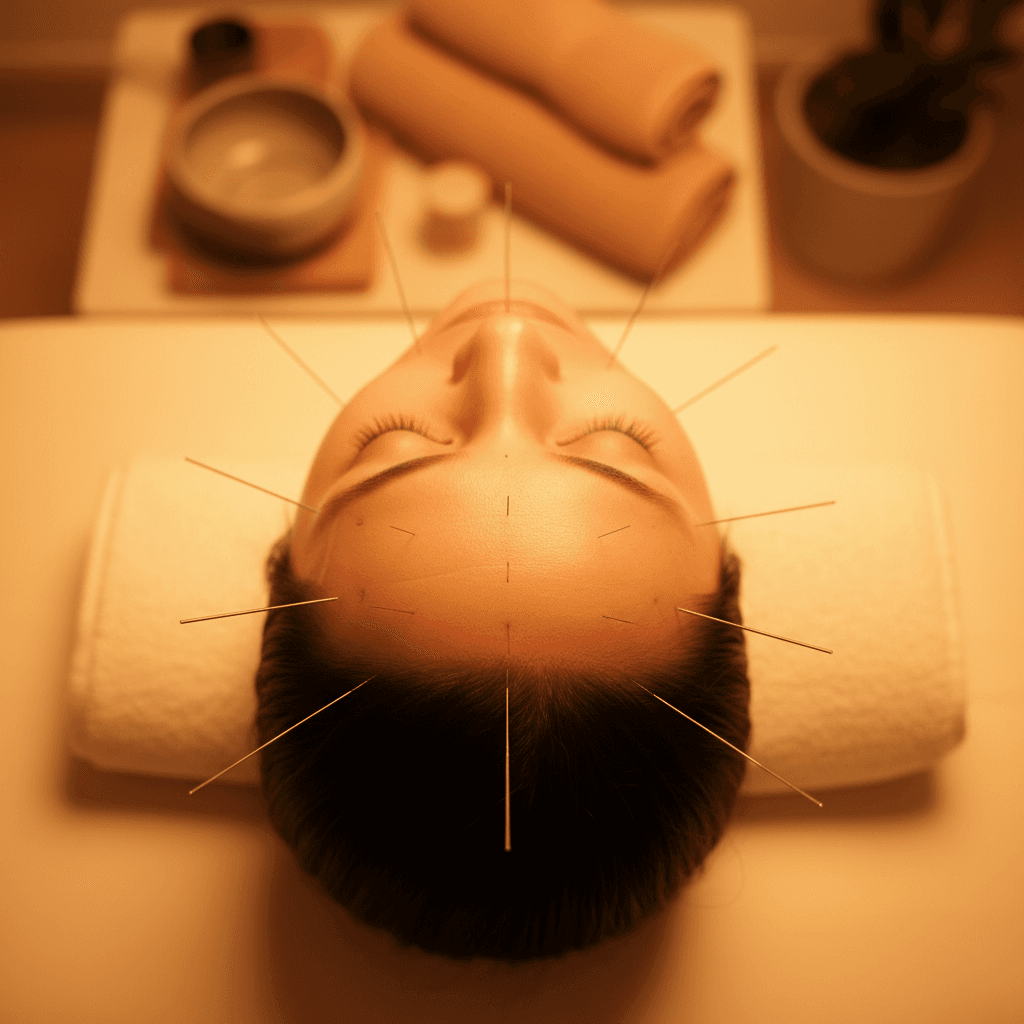
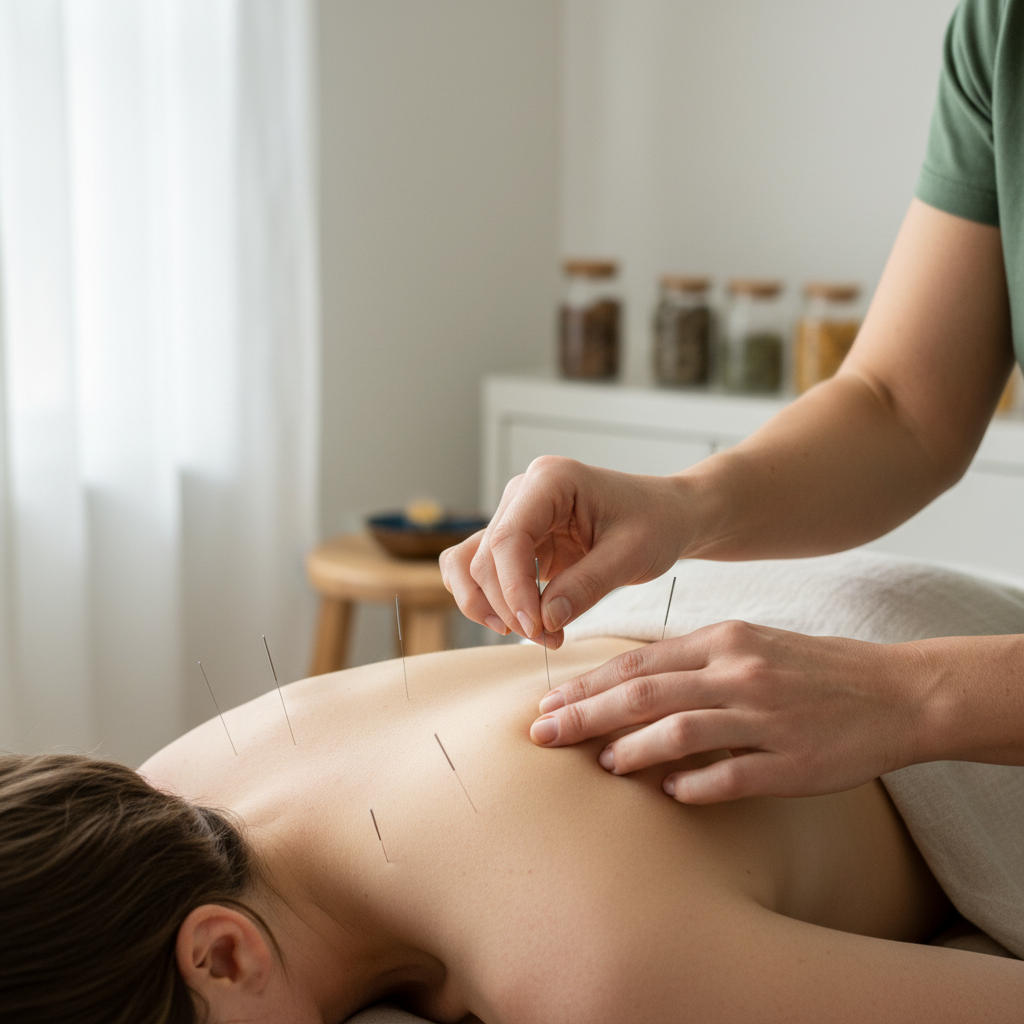
If you've been dealing with a stubborn muscle knot, chronic shoulder tension, or recurring back pain, you've probably heard two terms thrown around by Fort Collins practitioners: dry needling and acupuncture. Most people assume they're completely different treatments, or that one is simply a modern, science-backed upgrade of the other. Neither assumption is quite right. The conversation around these two approaches has been oversimplified for too long, and that matters when you're trying to make a smart decision about your care. In this article, you'll learn what the research actually says about how these techniques overlap, where they diverge in meaningful ways, and why the scope of acupuncture extends well beyond what dry needling alone can address for athletes and active patients in Fort Collins and Loveland.
Why the Dry Needling vs Acupuncture Debate Keeps Getting It Wrong
Search "dry needling vs acupuncture Fort Collins" and you'll find a consistent story: acupuncture is ancient energy work rooted in qi and meridians, dry needling is modern anatomy science, and the two have almost nothing in common except the needle. Local PT clinic pages repeat this framing confidently. The problem is that it's wrong, or at minimum, seriously incomplete.
Reducing classical Chinese needling practice to meridian mysticism ignores centuries of clinically sophisticated, palpation-based point selection that has far more in common with modern musculoskeletal treatment than most comparison articles acknowledge. That framing isn't neutral. It's a straw man that benefits practitioners with less needling training.
This article covers three things nearly every local comparison piece skips entirely: the documented relationship between ashi points and trigger points, what Czech physician Karel Lewit actually found in 1979 and why it matters to anyone considering needling for pain, and the training gap that patients in Fort Collins and Loveland rarely hear about before booking an appointment.
Ashi Points and Trigger Points: The Same Map, Drawn Centuries Apart

Start with a question most patients never think to ask: if dry needling and acupuncture are completely unrelated, why do they keep treating the same spots?
Ashi points are documented in classical Chinese medicine texts dating back to the Tang Dynasty, roughly the 7th century CE. The term translates loosely as "ouch, that's the spot," which is exactly how they were located: a practitioner would palpate the area, the patient would respond, and the needle went in at the site of peak local tenderness. No meridian chart required. No qi diagnosis needed. Just systematic, palpation-guided identification of painful tissue, followed by needling.
Janet Travell and David Simons introduced the modern trigger point model in the latter half of the 20th century. Their work was rigorous and valuable, mapping patterns of referred pain from taut muscle bands and creating a framework that physical therapists and physicians adopted widely. Dry needling developed from this model, targeting trigger points with needles to release muscle tension and reduce pain.
Here is where the framing from local PT clinic pages gets misleading. A 2008 analysis by Peter Dorsher found that over 90% of common myofascial trigger points correspond anatomically with established acupuncture points. A peer-reviewed PMC publication took this further, concluding that trigger points are best understood as muscle-specific ashi points, a subset of a broader category that classical Chinese medicine had already documented.
The implication is straightforward: dry needling did not discover a new map. It rediscovered a portion of an existing one and gave it a new name. For patients comparing dry needling and orthopedic acupuncture services in the Fort Collins and Loveland area, this is a meaningful distinction. The "totally different modalities" framing collapses under basic historical and anatomical scrutiny, and it shapes decisions that deserve better information.
What Karel Lewit Actually Found in 1979 (And Why It Matters Here)

The overlap between ashi points and trigger points is significant on its own. But there is a deeper layer that Fort Collins comparison articles consistently skip, and it comes from a Czech physician named Karel Lewit.
In 1979, Lewit published a landmark paper examining needle insertion in patients with chronic myofascial pain. He was not testing acupuncture theory or trigger point protocols. He was studying what the needle itself actually does. What he found was straightforward and important: the mechanical act of inserting a needle into a painful spot produced immediate local analgesia at the moment of needle contact. He called this the "needle effect."
Here is the part that rarely gets mentioned in local dry needling comparisons. Lewit documented this analgesic response at painful spots broadly, not exclusively at trigger points meeting Travell and Simons' specific diagnostic criteria. The effect appeared at sites of local tenderness regardless of whether those sites qualified as classical trigger points. That distinction matters because it means the therapeutic mechanism Lewit identified is not owned by the trigger point model. It is not dependent on a Western anatomical diagnosis. It operates at the tissue level in response to needling, full stop.
For a patient in Fort Collins or Loveland comparing needling providers, the implication is direct. The mechanism Lewit documented in 1979 is the same one that licensed acupuncturists have been applying for centuries at ashi points, many of which are not trigger points at all. Lewit's research does not validate dry needling over acupuncture. If anything, it validates a broader needling model, which is precisely what a licensed acupuncturist practices.
The trigger point framework is one useful lens for understanding where to needle and why. It is not the only lens, and Lewit's own findings confirm that.
The Training Gap: What Fort Collins Patients Are Rarely Told

Lewit's findings point toward a broader needling model. Understanding who is trained to apply that model safely is where the conversation shifts from academic to practical.
In Colorado, a licensed physical therapist can legally perform dry needling after completing a post-licensure course. In practice, that typically means approximately 50 hours of instruction spread across two weekend seminars. The curriculum covers trigger point identification, needle handling basics, and some anatomical review. That is the entry point for inserting needles into human tissue in this state.
A licensed acupuncturist completes a different path entirely. An L.Ac. or DAOM holds a 3 to 4 year graduate-level Master's or doctoral degree from an accredited program, with thousands of supervised clinical hours focused specifically on needling. That training covers point location with precision, tissue depth by region, neurovascular structures to avoid, contraindications across patient populations, and the full range of musculoskeletal needling applications that dry needling uses as its core. The musculoskeletal work that defines dry needling is not an add-on for an acupuncturist. It is a subset of what the degree already covers.
This is not a criticism of physical therapists. They bring substantial expertise in rehabilitation, movement assessment, and manual therapy. But patients comparing needling providers deserve to know what the training gap actually looks like before booking an appointment. That information is rarely disclosed proactively by PT clinics offering dry needling in Fort Collins.
The PAA question "why is dry needling illegal in some states" connects directly to this point. Several states reviewed the evidence and concluded that safe needling practice requires a level of training that cannot be responsibly compressed into a weekend course. Colorado permits it. The gap remains.
At Acumotion Sports Therapy, our practitioner holds graduate-level acupuncture training. For patients exploring dry needling and orthopedic acupuncture services in the Loveland and Fort Collins area, that distinction is worth knowing before making a choice.
Acupuncture's Scope Is Broader: Beyond the Trigger Point Model

The training gap matters in part because of what a licensed acupuncturist can actually do with that training. Dry needling, as practiced in most PT settings, operates within the trigger point model: locate taut bands, needle the knot, reduce local tension. That is a legitimate and useful application. It is also a narrow slice of what needling can address.
Ashi points include sites of local tenderness that are not muscle knots. Some reflect referred patterns from deeper tissue layers, nerve irritation, or systemic load on the body that shows up as regional sensitivity. A licensed acupuncturist is trained to identify and needle these sites, including points that dry needling protocols do not map and that a trigger point checklist would not flag.
Motor point therapy is one specific example of this expanded scope. Acumotion Sports Therapy incorporates motor point work directly into musculoskeletal sessions. Motor points target neuromuscular junctions, the sites where motor nerves enter muscle tissue, and are particularly relevant for athletes dealing with inhibited muscle function, chronic tension that does not resolve with trigger point release alone, or post-injury neuromuscular patterns that affect movement quality.
Patients searching "dry needling vs acupuncture for nerve pain" are asking a real and practical question. Sciatica, radiculopathy, and peripheral nerve pain do not fit cleanly into the trigger point model. These presentations respond to needling approaches that address nerve pathways and tissue layers beyond the muscle band, which falls squarely within an acupuncturist's scope and training.
For athletes and active individuals across Fort Collins and Loveland, the practical advantage of dry needling and orthopedic acupuncture services at Acumotion is access to that full tool set. Cupping, myofascial release, and manual therapy integrated into the same session means complex presentations get addressed as a whole, not just at the most obvious point of local tension.
Which Should You Choose in Fort Collins and Loveland?
Given everything covered here, a direct answer is more useful than a vague "it depends."
For musculoskeletal pain, trigger points, sports injuries, and movement dysfunction, a licensed acupuncturist trained in orthopedic and sports acupuncture can do everything dry needling offers, plus needle ashi points that fall outside the trigger point model, address nerve pain presentations, and integrate motor point therapy and manual techniques in the same session. The training depth is not comparable. That is a fact, not a marketing claim.
If you are already working with a physical therapist and dry needling is one component of an active rehab plan, continuing that relationship makes sense. But for patients seeking a primary needling provider for the dry needling vs acupuncture Fort Collins decision, the acupuncturist's scope and clinical training represent the stronger foundation.
Acumotion Sports Therapy serves Loveland, Fort Collins, and the surrounding Northern Colorado area. New patients can start with Fort Collins acupuncture care or learn more about what to expect at your first session.
Understanding the distinctions between traditional acupuncture and trigger point techniques is essential for optimizing your recovery. While the Lewit effect and Ashi points offer powerful ways to address musculoskeletal pain, choosing the right method depends on your unique physical goals. If you want expert help determining the best approach for your body, our team is ready to guide you. Exploring the benefits of Dry Needling is a great next step toward restoring your mobility and finding lasting relief from chronic tension.