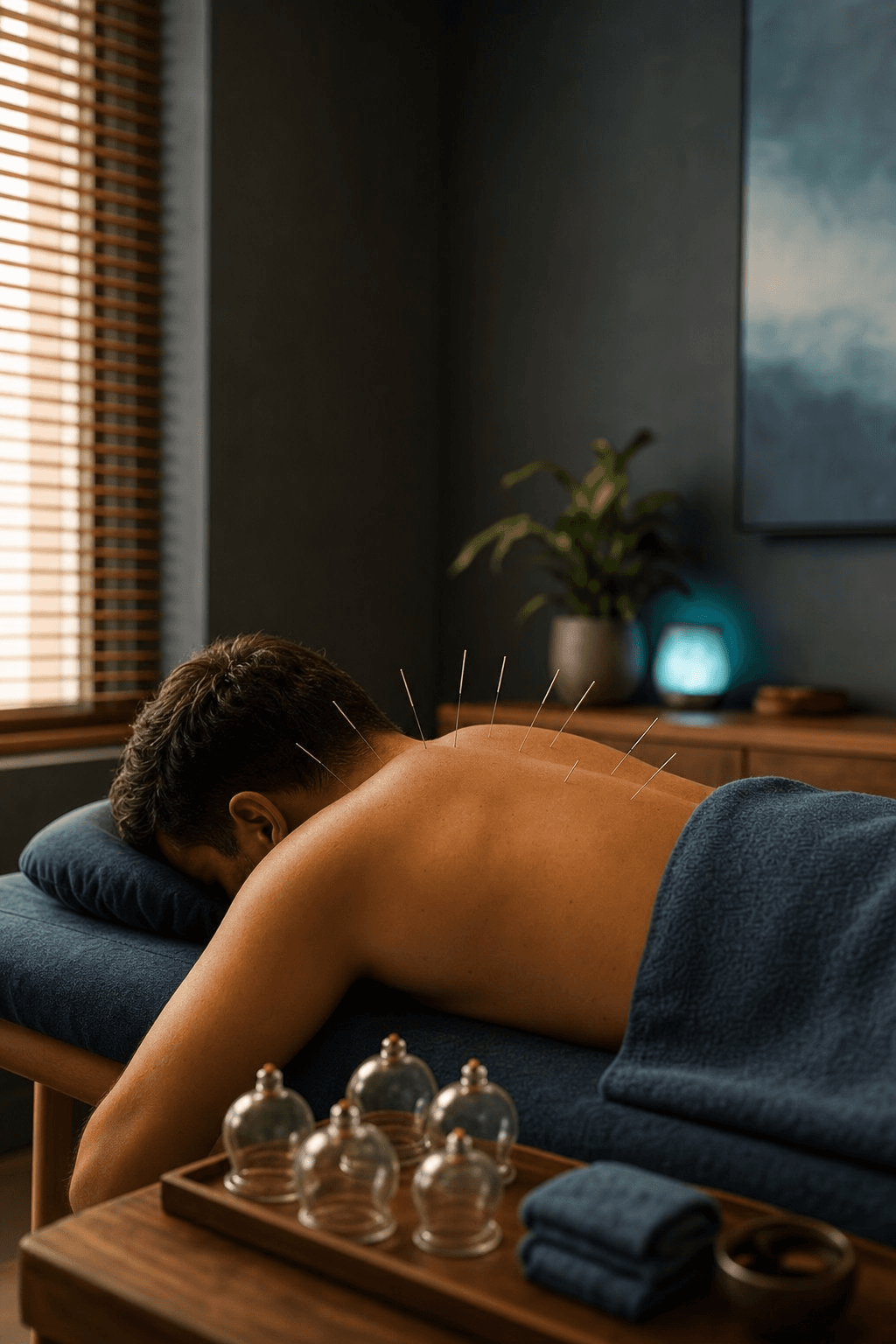

Dry needling is acupuncture. Every time a physical therapist insists dry needling is not acupuncture, they explain how dry needling works using physiological mechanisms that acupuncture researchers have studied for years. They describe dry needling with terms like motor end plates, acetylcholine, hypoxia, nociceptors, spinal reflexes, endogenous opioids and central sensitization. It sounds modern and scientific. Then they describe acupuncture using only qi, yin and yang, as if acupuncture research stopped two thousand years ago. They leave out the modern acupuncture research that uses many of the same biomedical terms they use to explain dry needling. That is not an honest comparison. You cannot explain one treatment with modern neurophysiology and explain the other with ancient philosophy, then use the difference in vocabulary as proof that the treatments are unrelated.
The usual dry needling explanation goes something like this. A dysfunctional motor end plate releases excessive acetylcholine. Muscle fibers remain contracted. Local circulation and oxygen decrease. This may contribute to an energy crisis and the release of chemicals that sensitize nociceptors. The nervous system continues receiving pain signals. Over time, peripheral and central sensitization may develop. The needle is used to stimulate the tissue, produce a twitch response, alter motor end plate activity, change the local chemical environment and influence spinal and descending pain inhibition. But none of that is exclusive to dry needling. Acupuncture research also uses terms such as motor end plate, neuromuscular junction, acetylcholine, acetylcholine receptors, ischemia, hypoxia, nociceptors, afferent nerves, spinal inhibition and central sensitization. Electroacupuncture research has studied motor end plate recovery and acetylcholine receptor activity. Acupuncture research has also investigated endogenous opioids, adenosine, connective tissue, fibroblast activity, mechanotransduction and brain pain networks.
The Same Physiology: Why the Needle Does Not Ask Who Holds It
The nervous system does not ask who is holding the needle before deciding how to respond. A needle does not enter a trigger point and say, this is a physical therapist, so today I will affect acetylcholine, but yesterday an acupuncturist used me, so I had to work with qi. The response depends on where the needle is inserted, how deeply it is inserted, how it is manipulated, whether electricity is used, how long it remains and how the patient responds. It does not depend on what profession designed the brochure.
Qi, yin and yang are concepts from an ancient medical philosophy. They gave early practitioners a way to organize functions, patterns and clinical relationships before anyone could measure neurotransmitters or oxygen levels in tissue. Oxygen, acetylcholine, agonists and antagonists are modern scientific terms describing measurable physiology. These are different types of language. They are not competing chemicals inside the body. I can use traditional pattern recognition to organize a treatment while also understanding the anatomy, nerves, motor points and pain mechanisms involved. Modern acupuncturists study anatomy, physiology, pathology and biomedical research. Many of us use orthopedic testing, trigger point needling, motor point acupuncture and electroacupuncture. Using modern terminology does not make dry needling a completely new physical procedure. It means modern science has developed better tools for explaining what needling does.
Some dry needling advocates insist the practices are completely separate, yet dry needling papers cite acupuncture studies when explaining how needling may work. Dunning and colleagues published a widely cited review describing dry needling as inserting thin monofilament needles used in acupuncture. The review drew from acupuncture research, including Langevin's studies of connective tissue and fibroblast responses to acupuncture needle manipulation. Dry needling literature also discusses endogenous opioids, remote pain reduction, sensitization and connective tissue effects. Acupuncture researchers have investigated all of these mechanisms. I am not saying every dry needling paper was stolen from acupuncture. I am saying it is difficult to claim the treatments are physiologically unrelated while using acupuncture research to explain how dry needling works. Apparently acupuncture is ancient nonsense in the advertisement but legitimate science in the bibliography.
Dry Needling Is a Small Part of a Larger Practice
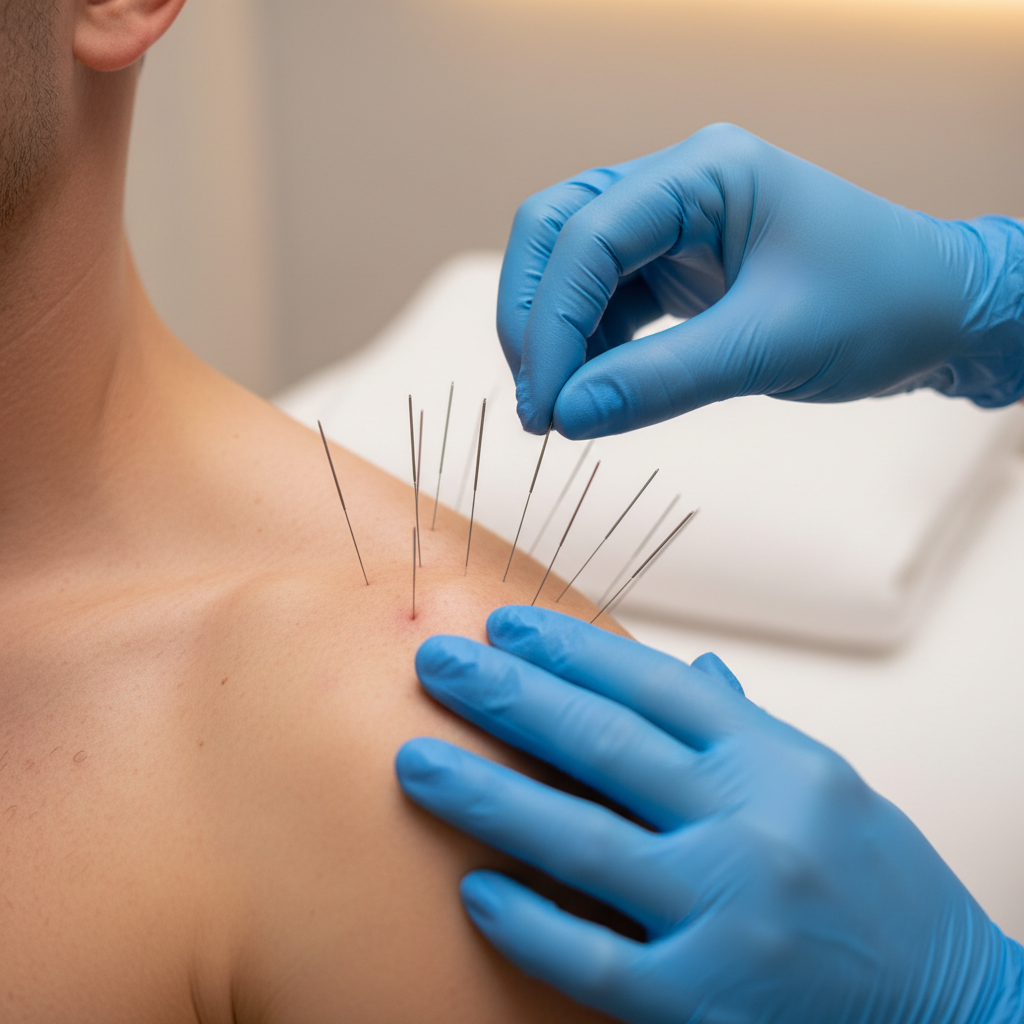
Another common argument is that dry needling targets trigger points while acupuncture uses acupuncture points, so they cannot be the same. The latest research makes that argument difficult to defend. In 2025, Dorsher, Schmid and Fleckenstein compared 262 of the most common myofascial trigger point locations from the Trigger Point Manual with classical acupuncture points. They found 95 percent anatomical correspondence and greater than 97 percent correspondence in pain indications. That means the points were not merely located in the same general neighborhood. They overwhelmingly corresponded anatomically and were used for the same types of pain. The researchers also reported greater than 90 percent correspondence between myofascial referred pain patterns and acupuncture channel distributions. They concluded that trigger points and acupuncture points appear to describe the same underlying clinical phenomenon in treating pain. When 95 percent of the points correspond anatomically and more than 97 percent correspond in their pain indications, continuing to say our points are different sounds less like science and more like protecting a brand. Acupuncture is not limited to numbered classical points anyway. Ashi points are painful or reactive areas found through palpation. That concept has existed in acupuncture for centuries. Modern acupuncturists also needle trigger points, motor points, nerve pathways, tendons and periosteal tissue. Finding a painful location in a muscle and needling it is not foreign to acupuncture. Giving that location an English name does not erase the history.
Dry needling and acupuncture are not identical professions. Dry needling is usually taught as a narrower neuromusculoskeletal approach. It focuses on painful tissue, trigger points, motor points, nerves, movement problems and local or segmental dysfunction. Acupuncture includes those musculoskeletal applications, but it is much broader. An acupuncturist may combine local orthopedic needling with distal points, contralateral treatment, scalp acupuncture, auricular acupuncture and electrical stimulation. Acupuncture has also been used for headaches, nausea, digestive problems, pelvic symptoms, stress and mental support. Research is stronger for some conditions than others, but acupuncture was never limited to one tight muscle. Dry needling is no longer limited to pistoning a trigger point until it twitches. Practitioners now describe superficial dry needling, deep dry needling, peri-neural needling, tendon needling, scar needling and electrical dry needling. The more dry needling expands, the more acupuncture it seems to rediscover.
The real differences involve professional training, diagnostic framework, legal scope, treatment range and marketing. Those differences matter, but they do not create a separate human physiology. A fair comparison would place dry needling neurophysiology next to acupuncture neurophysiology. It would compare techniques, education, point selection, safety and research. It would not compare modern dry needling research with an oversimplified version of ancient Chinese philosophy. Dry needling uses the same type of needle. It uses mechanisms studied in acupuncture research. Its trigger points overwhelmingly correspond with acupuncture points. Its major techniques already exist within the broad practice of acupuncture. Dry needling is best understood as a narrow, modern neuromusculoskeletal application of needling. Acupuncture contains that approach and much more. Physical therapists may want a separate name for professional, legal or marketing reasons. I understand why separating the name is useful to them. But changing the name and using more scientific terminology does not make the physical treatment unrelated to acupuncture. You can call it dry needling if you want. Just stop pretending acetylcholine knows the difference.
Qi Is Not Fighting With Oxygen
Dry needling uses the same type of needle, the same mechanisms studied in acupuncture research, and trigger points that overwhelmingly correspond with acupuncture points. Qi, yin and yang are concepts from an ancient medical philosophy. They gave early practitioners a way to organize functions and patterns before anyone could measure neurotransmitters or oxygen levels in tissue. Oxygen, acetylcholine, agonists and antagonists are modern scientific terms describing measurable physiology. These are different types of language. They are not competing chemicals inside the body. Modern acupuncturists study anatomy, physiology, pathology and biomedical research. Many of us use orthopedic testing, trigger point needling, motor point acupuncture and electroacupuncture. Using modern terminology does not make dry needling a completely new physical procedure. It means modern science has developed better tools for explaining what needling does.
Dry needling and acupuncture are not identical professions, but dry needling is a small part of the larger acupuncture practice. Dry needling is usually taught as a narrower neuromusculoskeletal approach focused on painful tissue, trigger points, motor points, nerves and local dysfunction. Acupuncture includes those musculoskeletal applications but is much broader. An acupuncturist may combine local orthopedic needling with distal points, contralateral treatment, scalp acupuncture, auricular acupuncture and electrical stimulation. Acupuncture has also been used for headaches, nausea, digestive problems, pelvic symptoms, stress and mental support. Research is stronger for some conditions than others, but acupuncture was never limited to one tight muscle.
Dry needling is no longer limited to pistoning a trigger point until it twitches. Practitioners now describe superficial dry needling, deep dry needling, peri-neural needling, tendon needling, scar needling and electrical dry needling. The more dry needling expands, the more acupuncture it seems to rediscover. None of these techniques uses a different physiology. The real differences are professional training, legal scope, treatment range and marketing, and none of those create a separate human physiology.
The Shared Science: How Both Modalities Affect the Nervous System
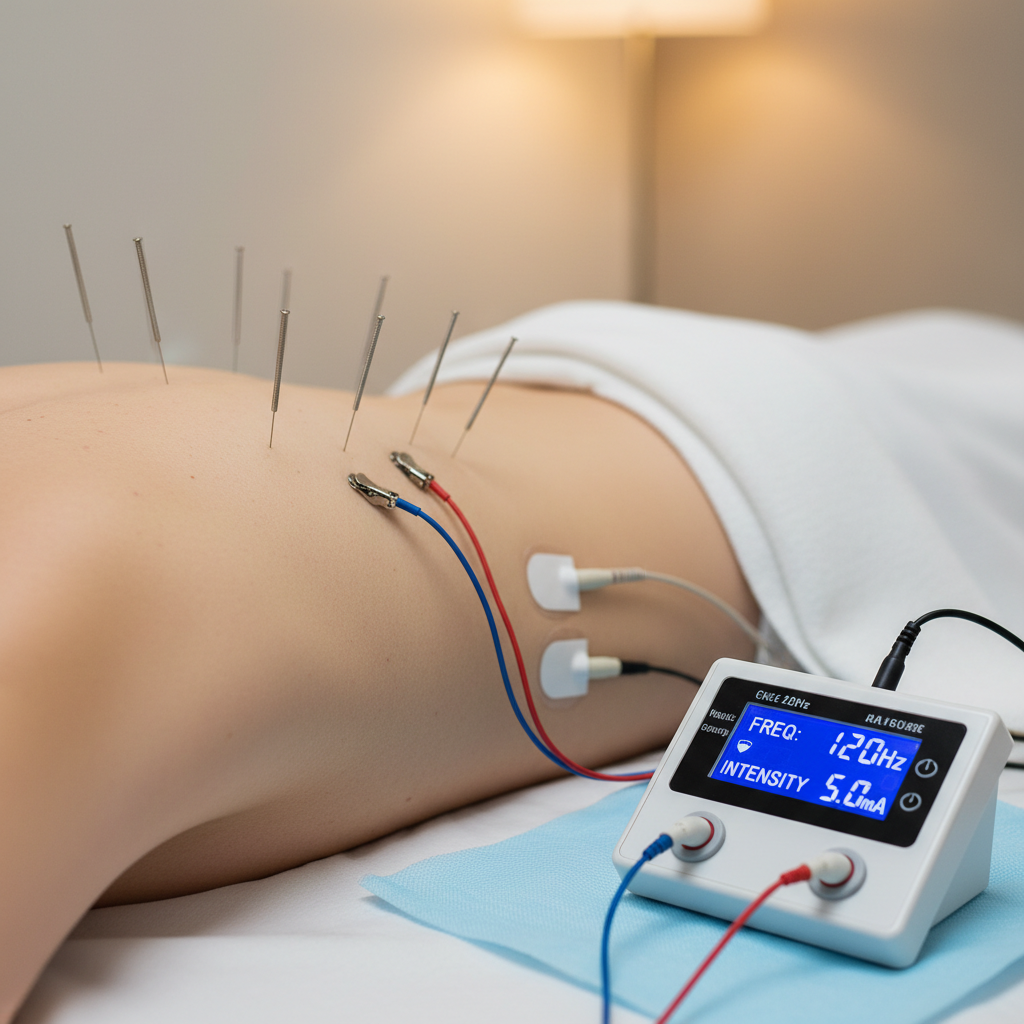
There are no separate physiologies here. Once a needle penetrates the skin, one cascade of neurophysiological events begins, and it is the same whether the person holding the needle calls it dry needling or acupuncture. The question of whether dry needling is the same as acupuncture becomes less about the name of the technique and more about the biological response it elicits. Both methods stimulate the central nervous system and modulate pain through the same shared mechanisms.
When we insert a needle, we are engaging sensory nerves that communicate directly with the spinal cord and the midbrain. This interaction triggers the release of endogenous opioids, such as endorphins and enkephalins, which serve as the body’s primary defense against pain. Simultaneously, the mechanical stimulus increases local micro-circulation. This surge of oxygenated blood helps resolve stagnation, flushing out the inflammatory markers that keep muscles in a state of chronic guarding.
The most significant overlap between dry needling and orthopedic acupuncture occurs in the application of motor point therapy. A motor point is the precise anatomical location where a motor nerve enters the muscle belly. These sites are the most electrically active areas of a muscle and frequently correspond to both myofascial trigger points and traditional acupuncture points. By utilizing sports acupuncture techniques at these junctions, we can reset muscle tone and restore proper function.
Many practitioners enhance this with electroacupuncture, applying a gentle micro-current to the needles for continuous rhythmic stimulation. This reflects the shared science between modern needling and acupuncture research, not a boundary between the two. The nervous system responds to the needle and the current, not to the job title of the person applying them.
Does Dry Needling Feel Different From Acupuncture?
Patients often worry about the physical sensation of the needle. The depth depends on the target tissue, such as deep gluteal muscles versus superficial wrist tendons, and the same needle has the same range whether the person holding it is a physical therapist or an acupuncturist. Dry needling often uses a technique called pistoning, moving the needle vertically to stimulate a trigger point and create a quick involuntary contraction known as a local twitch response. Acupuncture uses the same needle and the same sense of what the tissue is doing.
The sensation of the needle is not a point where the two approaches diverge, because there are not two different physiologies to diverge. Both dry needling and acupuncture accept a dull ache, a release or a brief twitch as a sign the tissue is responding, and these sensations should be seen as productive rather than painful, the moment a muscle lets go of a chronic contraction.
Dry Needling Is Acupuncture for Sciatica and Sports Injuries
For athletes in Windsor and Loveland, the choice of needling approach comes down to the nature of the injury. Sciatica is an example where a narrow trigger point focus can fall short for nerve pain. The same needling approach can release tight gluteal fibers that pull on the joint while also calming the nerve inflammation that radiates down the leg. This is the breadth acupuncture contains, and it is why dry needling is best understood as part of that larger practice rather than as a separate physiology.
The same integrated approach applies to knee pain and shoulder injuries. In a rotator cuff injury, needling the infraspinatus addresses local tissue damage while a broader needling strategy regulates the surrounding neurological pathways. This is one practice with multiple levels of application, not two separate physiologies being combined.
The Training Gap: Why the Practitioner Matters More Than the Label

The real difference between the two is not the needle and not the physiology. It is the training of the person holding the tool. In many states, a physical therapist can perform dry needling after a weekend course of 20 to 50 hours. A Licensed Acupuncturist holding a Doctorate of Acupuncture and Chinese Medicine, like Dr. Geno Diveley, has completed over 3,000 hours of clinical training across four or more years of graduate study. Dry needling is not a separate form of medicine; it is a narrower subset of what acupuncture training already covers in depth.
This training gap directly impacts patient safety and clinical outcomes, especially when treating areas near the thoracic cavity or major neurovascular structures. The point here is not that dry needling produces different biological effects. It is that the same technique, applied by someone with less training, is a narrower and less complete version of the practice acupuncture already includes.
Feature | Licensed Acupuncturist (DACM) | Weekend-Certified Practitioner |
|---|---|---|
Clinical Training Hours | 3,000+ Hours | 20–50 Hours |
Education Level | Doctorate / Master’s Degree | Continuing Education Certificate |
Scope of Practice | Systemic, Orthopedic, & Myofascial | Primarily Musculoskeletal |
Needle Mastery | 4+ Years Supervised Practice | 2–3 Day Workshop |
Choosing a specialist with 30+ years of experience means the needling is not a reactive measure but a sophisticated intervention. Dry needling uses the same needle, the same mechanisms, and the same points as acupuncture. What changes is the depth of training and the range of conditions the practitioner can address, not the biology of the needle.
Dry needling is acupuncture. It uses the same type of needle, the same mechanisms studied in acupuncture research, and trigger points that overwhelmingly correspond with acupuncture points. It is a narrow, modern neuromusculoskeletal application of needling, and acupuncture contains that approach and much more. Physical therapists may want a separate name for professional, legal or marketing reasons, and changing the name is useful to them, but it does not make the physical treatment unrelated to acupuncture. You can call it dry needling if you want. Just stop pretending acetylcholine knows the difference.