
Acupuncture and dry needling for hip pain Northern Colorado provide effective non-surgical relief for conditions such as labral tears and impingement by targeting muscle tension and reducing inflammation. These specialized therapies restore functional mobility and manage chronic pain through trigger point release and nervous system regulation; this offers a restorative alternative to surgery for local patients.
Persistent hip pain often feels like a barrier between you and the active lifestyle that defines life in Northern Colorado. Whether it is a deep ache during a hike up Horsetooth or a sharp pinch in the groin during your morning run, these limitations can make surgery feel like an inevitable conclusion. However, for many athletes and professionals, the root cause lies in mechanical dysfunction and chronic muscle recruitment patterns that standard rest cannot fix. In this guide, we will explore how dry needling and sports acupuncture serve as powerful, non surgical tools to resolve issues like labral tears, impingement, and bursitis. You will learn how these therapies reset hip mechanics, the specific differences between needling techniques, and why a clinical, evidence based approach is the key to reclaiming your mobility and returning to the sports you love.
Why Hip Pain Stalls Performance for Northern Colorado Athletes
Maintaining an active lifestyle is a core part of living in Northern Colorado. Between Saturday morning runs along the Poudre River Trail, tackling the steep inclines of Horsetooth Rock, or spending a Sunday afternoon golfing at Pelican Lakes in Windsor, the hips endure significant mechanical demand. When dysfunction develops, it often manifests as a deep, persistent ache in the groin or a sharp catching sensation during lateral movements. These symptoms quickly escalate from minor annoyances to performance-stalling injuries that keep you off the trail.
At Acumotion Sports Therapy, Dr. Geno Diveley, L.Ac., DACM, provides a specialized approach for athletes facing these challenges. Many patients arrive at our Windsor sports acupuncture clinic fearing that a diagnosis of a labral tear or hip impingement makes surgery a foregone conclusion. Fortunately, evidence-informed sports acupuncture in Northern Colorado offers a powerful alternative. By utilizing advanced techniques, including orthopedic acupuncture and dry needling for hip pain Northern Colorado residents rely on for recovery, we address the muscular imbalances and joint compression that drive symptoms. This clinical approach focuses on treating chronic hip conditions by restoring functional mobility, providing a clear path to dry needling for hip pain that avoids the operating room and gets you back to peak performance.
The Big Three: Hip Impingement, Labral Tears, and Bursitis
Understanding the specific pathology behind hip dysfunction is the first step toward effective recovery. At our Windsor sports acupuncture clinic, we typically see three primary diagnoses that interfere with an athlete’s mobility and power. While these conditions involve different structures, they are often interconnected by underlying biomechanical imbalances.
Femoroacetabular Impingement (FAI): This condition involves abnormal contact between the femoral head (the ball) and the acetabulum (the socket). Whether caused by extra bone growth on the ball (cam) or the socket rim (pincer), this anatomical mismatch creates bone-on-bone friction. Patients often feel a sharp, pinching sensation in the groin when squatting or bringing the knee toward the chest.
Hip Labral Tears: The labrum is a ring of specialized fibrocartilage that lines the hip socket, providing stability and acting as a shock absorber. When this tissue tears, it often produces a distinct clicking or catching sensation deep in the joint. Because the labrum has limited blood supply, these injuries are notorious for failing to heal on their own without intervention to improve joint environment.
Hip Bursitis (Greater Trochanteric Pain Syndrome): Unlike the deep groin pain of FAI or labral tears, bursitis manifests as tenderness on the outer side of the hip. This inflammation of the bursa sac makes it difficult to sleep on the affected side and often flares up after prolonged walking or standing.
What sets our approach to treating chronic hip conditions apart is how we view these structural issues. Many clinics focus solely on the bone or cartilage, yet muscle tension is frequently the hidden driver of pain. When the psoas, TFL, or deep rotators become chronically tight, they act like shortened cables that pull the femoral head out of its optimal alignment within the socket. This increased compressive force accelerates wear on the labrum and worsens FAI friction. By utilizing acupuncture and dry needling for hip pain Northern Colorado athletes can effectively address this muscular pull, resetting the joint's mechanics and allowing the structural irritation to finally subside.
How Dry Needling Resets Hip Mechanics
Dry needling functions as a mechanical and neurological reset for the soft tissues surrounding the hip joint. When an athlete experiences chronic pain, the nervous system often keeps specific muscles in a state of protective guarding. This manifests as myofascial trigger points, which are hyper-irritable bands of muscle fiber that restrict blood flow and produce referred pain. In the hip, these trigger points in the glute medius and minimus often mimic the symptoms of bursitis or sciatica, radiating pain down the lateral leg or deep into the buttock.
At our Windsor sports acupuncture clinic, we focus on the deeper structures that are difficult to reach with manual therapy alone. This includes the hip flexor complex, specifically the psoas and iliacus, and the Tensor Fasciae Latae (TFL). When a needle is inserted into a trigger point within these muscles, it elicits a local twitch response. This involuntary contraction is a sign that the muscle is releasing its chronic tension, allowing for immediate improvements in range of motion and a reduction in joint compression.
Patients often ask: does dry needling help a torn labrum hip? It is important to clarify that while the procedure does not physically repair a cartilage tear, it is highly effective at managing the symptoms. When muscles like the iliacus are chronically shortened, they pull the femoral head into the socket with excessive force, which irritates the torn labrum. By utilizing acupuncture and dry needling for hip pain Northern Colorado athletes can eliminate this compressive force. This shift in mechanics often makes the labral tear asymptomatic, allowing for pain free movement during high demand activities like trail running or weightlifting without the immediate need for surgical intervention.
The Acumotion Advantage: Sports Acupuncture and Motor Point Therapy
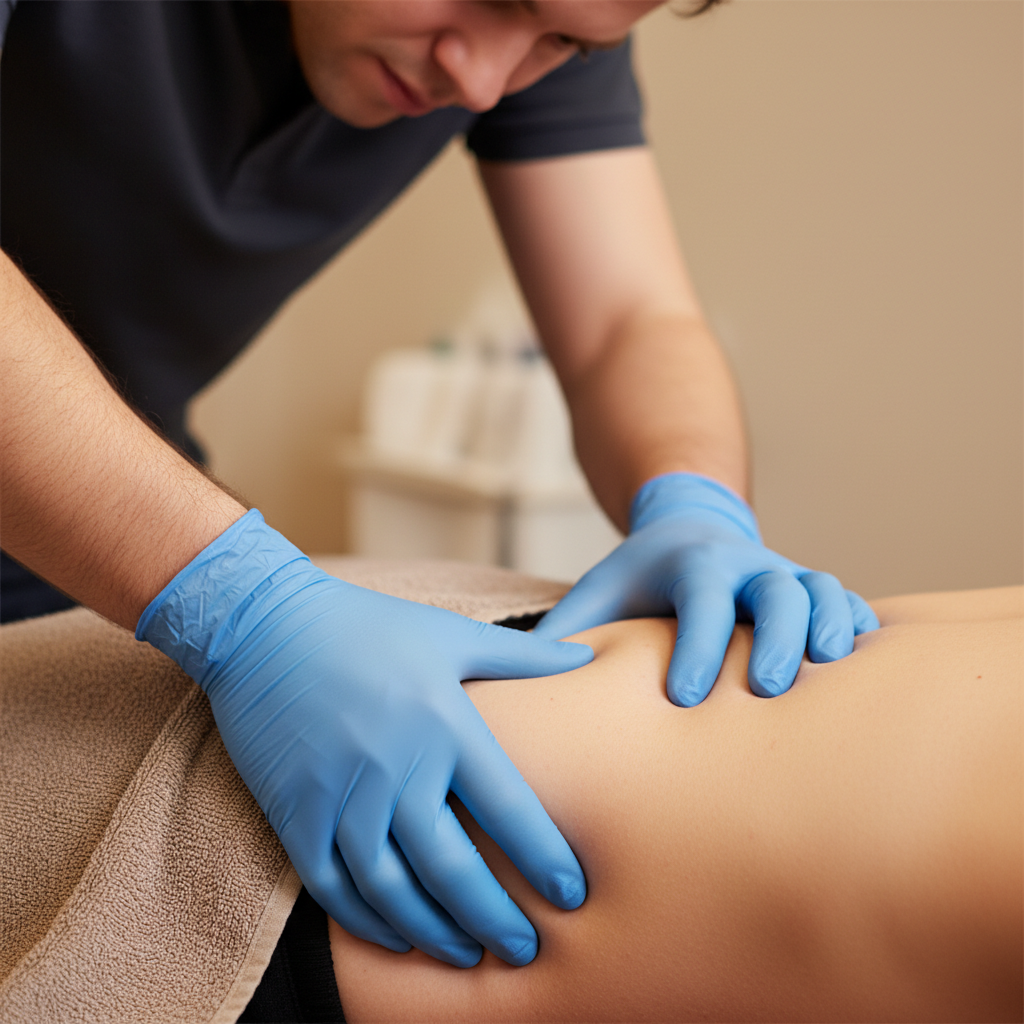
While dry needling is an essential tool for releasing tension, the Acumotion advantage lies in how we integrate it with Motor Point Therapy and electroacupuncture. At our Windsor sports acupuncture clinic, we look at the hip as a complex neurological system rather than just a collection of muscles. When an athlete deals with long term pain, the nervous system often inhibits or turns off key stabilizers, such as the gluteus medius, to protect the joint. Motor Point Therapy involves identifying the exact anatomical site where the motor nerve enters the muscle belly. By applying a targeted microcurrent through electroacupuncture, we essentially reboot the muscle. This process restores its ability to fire correctly and stabilize the hip during dynamic movements like a golf swing or a heavy squat.
This clinical precision is what distinguishes sports acupuncture in Northern Colorado at Acumotion from the general acupuncture often found at local wellness spas. Many general practitioners focus on systemic relaxation or stress relief, while some providers may only have weekend certifications in dry needling. Dr. Geno Diveley, L.Ac., DACM, brings over four years of intensive clinical training and a Doctorate of Acupuncture and Chinese Medicine to every treatment. This depth of education ensures that treating chronic hip conditions is based on a sophisticated understanding of functional anatomy and neurophysiology.
Utilizing acupuncture and dry needling for hip pain Northern Colorado in this way provides a more comprehensive result for the athlete. We do not just relax a tight muscle; we reactivate the dormant ones. This dual approach addresses both the hypertonicity causing the immediate ache and the underlying weakness that allowed the injury to develop, ensuring a more durable recovery for the active Northern Colorado community.
Dry Needling vs. Acupuncture for Hip Pain: What is the Difference?
Patients searching for acupuncture and dry needling for hip pain Northern Colorado often find the terms used interchangeably, but there are distinct differences in application and philosophy. Dry needling is a localized subset of orthopedic acupuncture that focuses almost exclusively on Western anatomical structures. It involves inserting needles into myofascial trigger points to physically release tight muscle bands and improve local blood flow. This is a highly mechanical approach designed to resolve specific dysfunction in muscles like the gluteus medius or the adductors.
Traditional acupuncture, by contrast, addresses the body’s broader neurological and systemic pathways. It utilizes specific points to modulate the nervous system, reduce systemic inflammation, and improve the body’s natural healing response. At our Windsor sports acupuncture clinic, we do not choose one over the other. Instead, we utilize an integrated strategy. By combining dry needling for hip pain to address local muscle knots with sports acupuncture in Northern Colorado to optimize nerve conduction and systemic recovery, we provide a more comprehensive solution for treating chronic hip conditions. This fusion ensures we tackle both the localized pain source and the underlying physiological environment that allows inflammation to persist.
Non-Surgical Recovery: Can Hip Impingement Be Fixed Without Surgery?
The question of whether hip impingement or labral tears can be resolved without surgery is a primary concern for many Northern Colorado athletes. Clinical research consistently reveals a significant disconnect between imaging results and physical symptoms. Studies show that a high percentage of active individuals, including professional athletes, have FAI or labral tears visible on an MRI while remaining completely pain-free. This evidence suggests that a structural finding does not always dictate a person's functional capacity or pain level.
At our Windsor sports acupuncture clinic, the goal is to make the patient asymptomatic by restoring joint mechanics and muscle function. By integrating acupuncture and dry needling for hip pain Northern Colorado residents can effectively manage the compressive forces that cause flare-ups. For local golfers at Pelican Lakes or runners on the Poudre River Trail, restoring internal and external rotational mobility is essential. When the hip joint moves freely, it avoids the repetitive pinching associated with impingement. Treating chronic hip conditions with this functional approach focuses on how the joint performs rather than just how it looks on a scan. Utilizing dry needling for hip pain to reset muscle length allows the joint to track properly, providing a robust non-surgical path to recovery.
Beyond the Needle: Cupping and Myofascial Release for Chronic Hip Stiffness
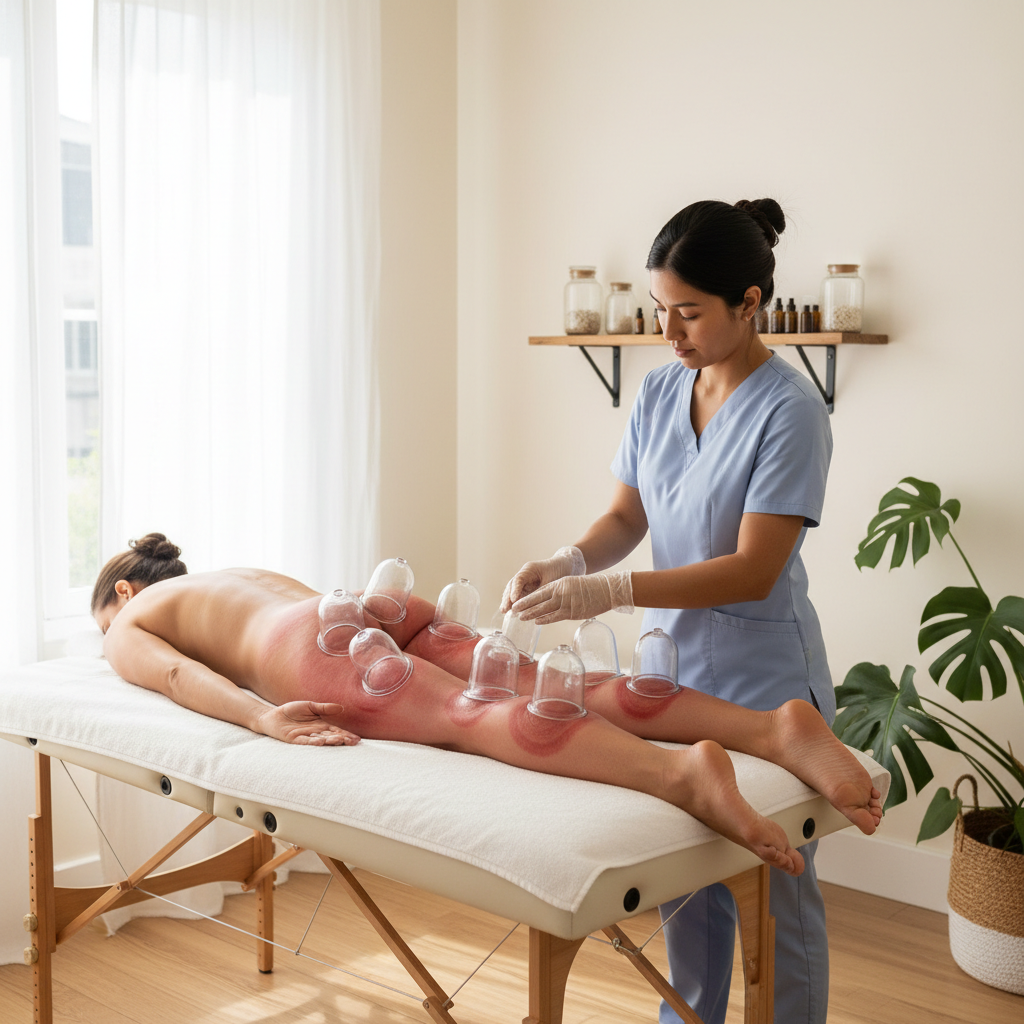
While needles are unparalleled for reaching deep motor points and internal joint structures, total recovery requires addressing the superficial layers of connective tissue. At our Windsor sports acupuncture clinic, we utilize cupping therapy and myofascial release to treat the dense, leather-like fascia found along the lateral hip and IT band. Traditional manual therapy often applies compressive force, but cupping creates a negative pressure environment that lifts and separates stagnant layers of fascia from the underlying muscle.
This creates a comprehensive 3D approach to treating chronic hip conditions. While dry needling for hip pain targets the deep, localized trigger points responsible for sharp catches or groin pain, cupping and myofascial release decompress the overlying tissue. This dual-layered strategy ensures that both the internal muscular environment and the external fascial sheath are moving freely. For athletes utilizing acupuncture and dry needling for hip pain Northern Colorado relies on for performance, this integrated method is essential for resolving the stubborn stiffness that often lingers after the initial inflammation has subsided.
Frequently Asked Questions About Hip Acupuncture in Northern Colorado

Choosing the right path for recovery involves weighing different clinical interventions. Here are the most common questions we hear at our Windsor sports acupuncture clinic regarding hip treatment.
Is dry needling better than cortisone injections for hip pain? Cortisone is a powerful anti-inflammatory that provides rapid temporary relief, but research indicates that repeated injections can actually degenerate local connective tissue and weaken tendons. In contrast, dry needling for hip pain promotes a regenerative response. By creating a precise micro-injury, the treatment stimulates localized blood flow and collagen production, allowing the body to repair tissue naturally rather than just masking the symptoms.
How many sessions will I need for results? While some athletes feel a change after one visit, treating chronic hip conditions typically requires a structured series of treatments to create lasting mechanical change. Most patients see significant functional improvement within 4 to 6 sessions. Complex cases involving labral tears or long-standing impingement may require 8 to 10 visits to fully stabilize the joint and prevent future flare-ups.
Does the treatment hurt? Directing a needle into a trigger point is different from receiving a standard vaccination. Most patients describe a deep, heavy ache or a brief muscle twitch. While this sensation can be intense for a moment, it is considered a productive feeling that signals the muscle is successfully resetting.
Can acupuncture help lower back and hip pain together? Yes, the two areas are biomechanically inseparable. The nerves that power your hip stabilizers exit from the lumbar spine at the L4 to S1 levels. If you have lower back stiffness, it often inhibits the gluteal muscles, leading to hip instability and pain. Our approach to acupuncture and dry needling for hip pain Northern Colorado involves treating the entire lumbopelvic complex to ensure the spine is not the primary driver of your hip dysfunction. This integrated focus is why sports acupuncture in Northern Colorado is so effective for complex, multi-site pain.